
Water damage in Minnesota? Call us now.
Emergency extraction and structural drying for homes and businesses — plus the repairs afterward.
- 24/7 — you'll reach a real person
- IICRC Triple Master Certified
- Cleanup and repairs, one company
Twin Cities metro · Rochester · St. Cloud · Duluth · Mankato
- Not a franchise. Family-owned, with a contractor's background behind every job.
- IICRC Triple Master — water, fire & smoke, textiles.
- 1,000+ five-star reviews across the markets we serve.
- Licensed and insured. MN #BC718628.
What we get called out for.
Most calls are one of these. If yours isn't, call anyway — we'll tell you straight whether it's something we handle.
- A pipe burst
- A frozen pipe let go
- The water heater failed
- A washer or dishwasher leaked
- There's water in the basement
- A supply line broke under a sink
- Rain or snowmelt came through the roof
- Sewage backed up — see sewage cleanup
Call at 2 a.m. Someone picks up.
612-351-6115Water damage doesn't wait for business hours, so neither do we. Call any time, tell us what happened, and we'll get response coordinated from there.
Four things worth doing right now.
- Shut the water off, if it's safe and you can find the valve.It's usually in the basement or near the meter. If you can't find it quickly, leave it and call — don't put yourself at risk looking.
- Treat standing water near outlets or the panel as unsafe.If there's any question about electricity, stay clear, and tell us when you call. When in doubt, get everyone out and call from outside.
- Where possible, leave wet items where they are.Moving soaked furniture tends to spread water and can make the loss harder to document.
- Photograph it before anything changes, if you safely can.Wide shots of each affected area. Adjusters generally want them, and they cost you nothing.
How a water loss actually goes.
Every loss is different, and the scope depends on what we find. This is the general order most jobs follow.
You call
A person picks up, takes the details, and gets response coordinated.
We look for the source
Water often shows up in one area and comes from another. Where it can be stopped, that comes first.
Extraction
Standing water is removed. The longer it sits, the further it typically travels into flooring and framing.
Moisture mapping
Meters and thermal imaging find the wet material you can't see — the step that separates a dry building from one that only looks dry.
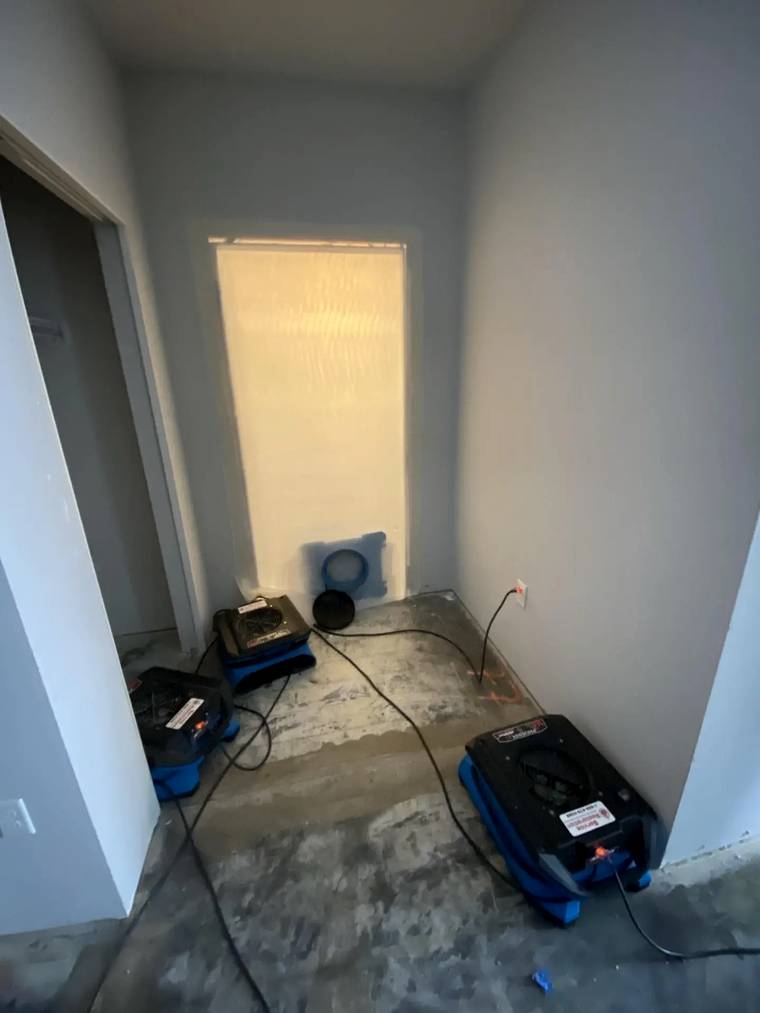
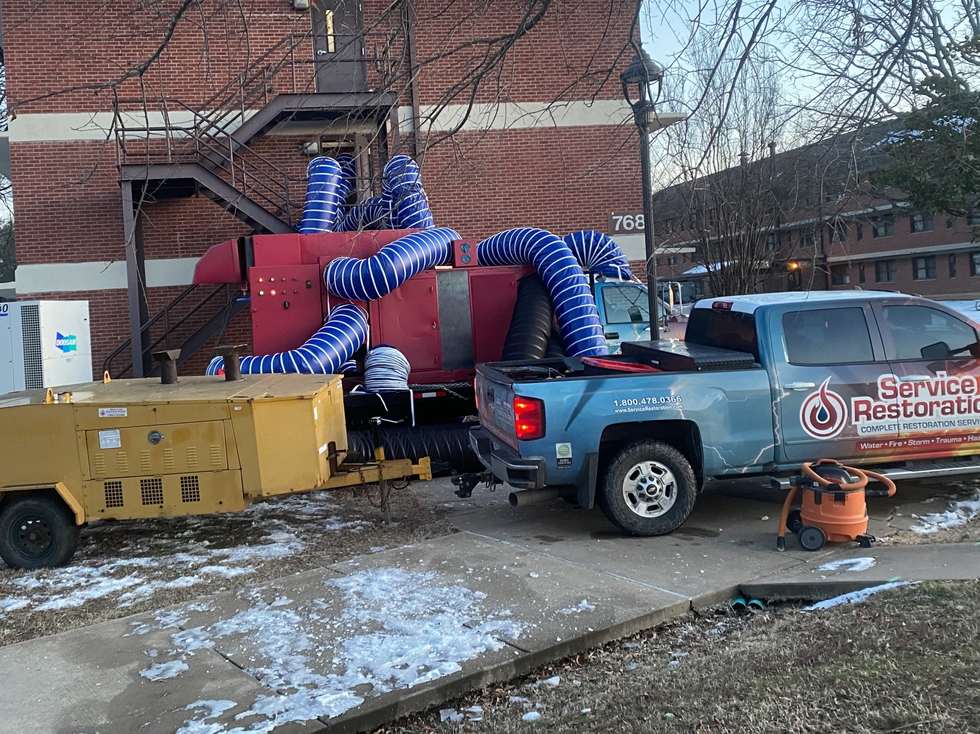
Structural drying
Air movers and dehumidifiers placed for the specific layout, running until moisture readings indicate drying is complete.
Cleaning and sanitizing
Scope depends on the water category. A supply-line break and a sewage backup are handled very differently.
Monitoring and documentation
Moisture readings are tracked and logged through the drying process. That record is what an adjuster generally works from.
Repairs
Where the project calls for it, we handle the rebuild too — so you're not hiring a second contractor.
What happens to everything inside.
The question people ask second, right after "how bad is it."
We inventory and pack it out
When a loss calls for it, affected contents are documented, boxed, and moved out so the structure can dry properly.
Master Textile Cleaner on staff
An IICRC Master-level certification that matters more than it sounds for rugs, upholstery, and clothing.
Climate-controlled storage
Stored contents are held in a temperature- and humidity-controlled space until the property is ready for them.
We don't hand you off when the drying's done.
Most restoration companies dry the building and give you a list of contractors. We do the repairs ourselves — no gap between the drying crew leaving and the rebuild starting, and nobody learning your property from scratch.
We deal with claims every day.
We document the loss, log moisture readings, photograph the damage, and provide the scope adjusters typically ask for. What we won't do is tell you what your policy covers — that's between you and your carrier, and anyone who promises otherwise is guessing.
Documentation
Photos, moisture logs, and a written scope, documented as the job progresses.
Adjuster coordination
We can work directly with your adjuster so you're not relaying messages between two parties.
Plain answers
We'll tell you what we're seeing and what it usually means, without pretending to be your insurer.
Before and after.
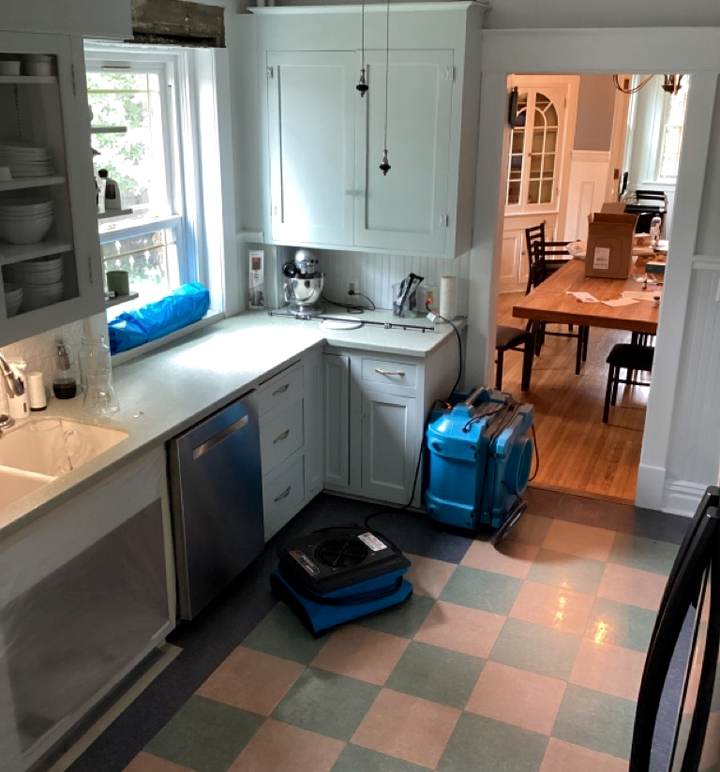
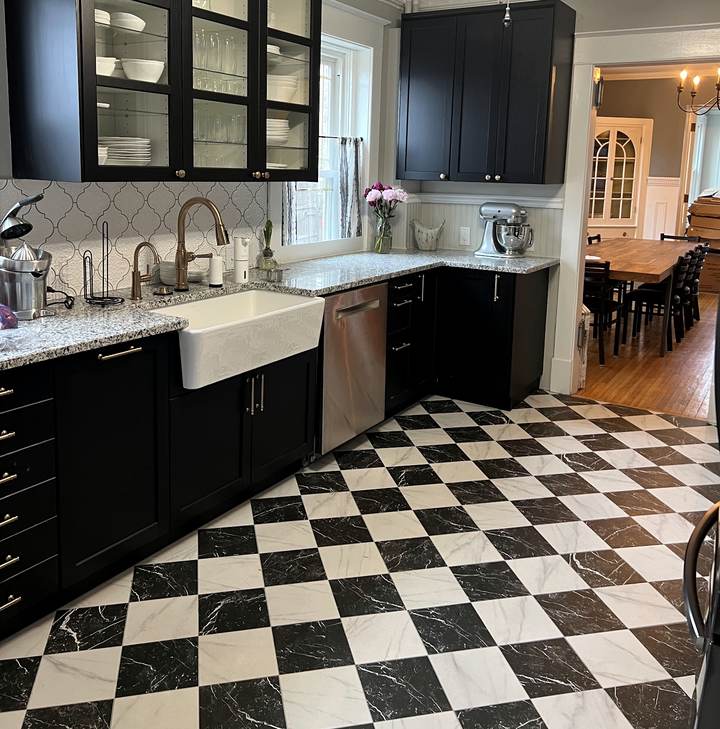
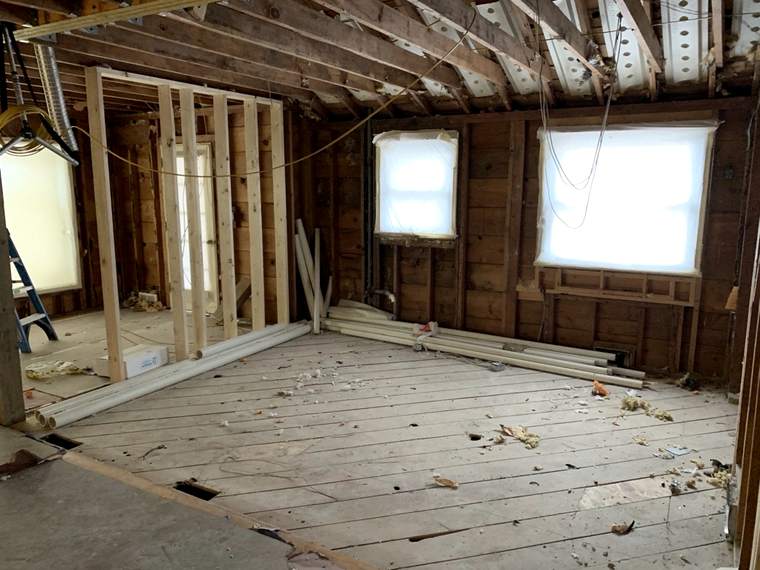
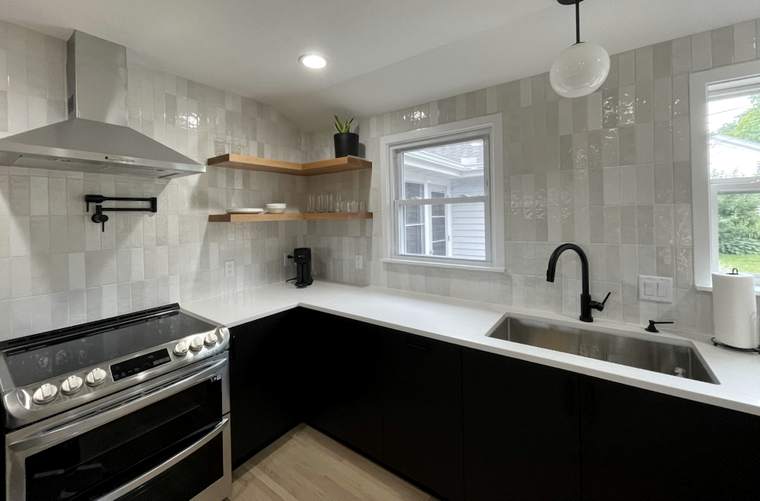
1,000+ five-star reviews across the markets we serve.
Two Minnesota offices. Statewide response.
We run crews out of Bloomington and Rochester. If your city isn't listed, call and ask — we'd rather tell you honestly than have you wait on a crew that isn't coming.
- Minneapolis
- St. Paul
- Bloomington
- Plymouth
- Woodbury
- Eagan
- Maple Grove
- Eden Prairie
- Stillwater
- Rochester
- St. Cloud
- Duluth
- Mankato
What people ask before they call.
How fast do I need to act?
As soon as you reasonably can. Water generally keeps moving into flooring, drywall, and framing for as long as it sits, so acting sooner often means materials can be dried rather than replaced.
Do you work with insurance companies?
Regularly. We document the loss, log moisture readings, and provide the scope adjusters ask for. We can't tell you what your policy covers — that's your carrier's call.
How long does drying take?
It depends on how much water, what got wet, and how long it sat. Drying continues until moisture readings indicate the structure is dry, rather than to a fixed schedule.
Can you do the repairs too, or just the cleanup?
Both, on most projects. We handle the drying and the repairs afterward, so you're not managing a handoff to a second contractor.
Do I have to leave the property?
Usually not. It depends which areas are affected and what the water was. We'll tell you what we're seeing when we get there.
What happens to my furniture and belongings?
Depending on the loss, affected contents can be inventoried, packed out, and cleaned at our facility, then held in climate-controlled storage until the property is ready.